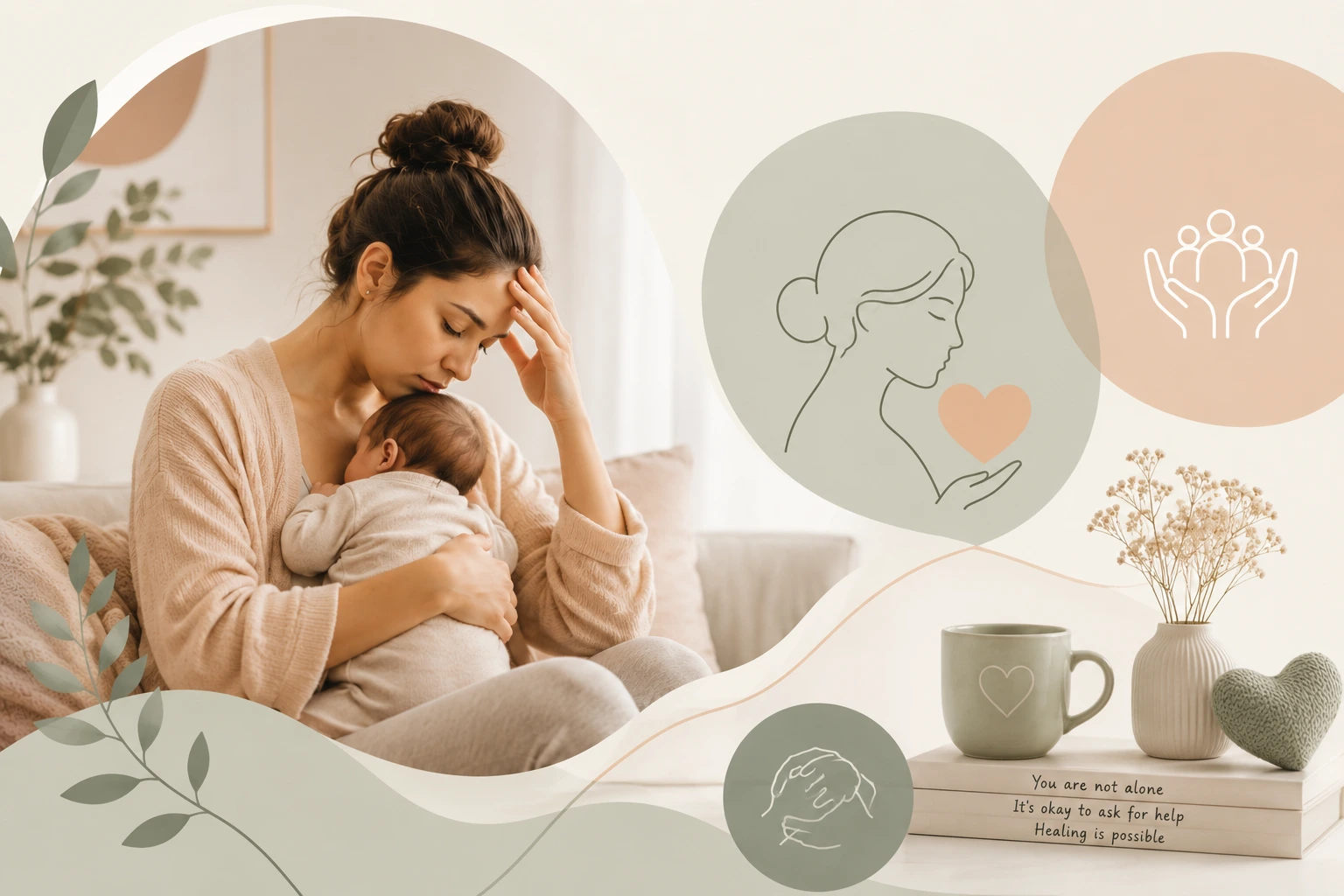
What Postpartum Depression Actually Feels Like
Postpartum depression rarely announces itself with a single dramatic moment. It tends to build quietly, which is exactly why so many mothers dismiss it as “just adjusting.”
Some of the more common signs of postpartum depression in new mothers include:
- A low mood that doesn’t lift, even on days when things are objectively going fine
- Losing interest in things you used to enjoy, including time with your baby
- Feeling numb, disconnected, or like you’re going through the motions of motherhood rather than living it
- Persistent guilt or a sense that you’re failing, even when everyone around you says you’re doing well
- Sleep problems that go beyond “the baby wakes me up”, trouble falling asleep even when the baby is finally down
- Constant worry or racing thoughts you can’t switch off
- Changes in appetite, either eating far more or far less than usual
- Irritability or anger that feels out of character
- In more serious cases, thoughts of harming yourself or a sense that your baby would be better off without you
That last point deserves its own sentence: if you are having thoughts of harming yourself, please don’t sit with that alone. Call emergency services (998 in the UAE) or go to your nearest hospital immediately. Postpartum depression is treatable, and reaching out at that point is not weakness, it’s the single most important thing you can do for yourself and your baby right now.
For most mothers, though, the picture is quieter than that. It’s the guilt of not feeling the rush of joy you were promised. It’s crying in the bathroom so no one hears. It’s forcing a smile for visitors and feeling completely hollow the second the door closes. These are real symptoms of a real, common, treatable condition not a character flaw.
Why Postpartum Depression Is More Common in Abu Dhabi Than People Realize
A few things about life and maternity care in this city make postpartum depression more likely, and harder to catch early.
Distance from your usual support system. A huge number of mothers in Abu Dhabi are expats who’ve had their babies thousands of kilometres from their own mothers, sisters, and close friends. The people who would normally show up with a meal, hold the baby so you can shower, or simply notice that you seem “not yourself” often aren’t here. Isolation is one of the strongest predictors of postpartum mental health struggles, and it’s built into the expat experience by default.
Little to no follow-up after hospital discharge. In many maternity systems, once you and your baby are medically cleared, you go home and the formal check-ins largely stop. There’s rarely a scheduled home visit in the weeks after birth to ask how you’re actually coping not just physically, but emotionally. Problems that would have been caught early in a system with routine home visits often go unnoticed until they’ve become entrenched.
High rates of surgical birth. Caesarean recovery adds physical pain, reduced mobility, and a longer healing timeline on top of everything else a new mother is managing, a combination that raises the risk of both physical and emotional strain in the postpartum weeks.
Employment and financial pressure. Research into postpartum depression among mothers in the UAE has linked risk to factors like part-time or reduced work status, financial strain, and returning to work sooner than mothers feel ready for, all common realities for families living here on renewable visas and single incomes.
None of these factors mean postpartum depression is inevitable. But they do explain why it’s more common here than the “new mum tired and emotional” stereotype suggests, and why it deserves to be talked about openly rather than quietly worked through alone.
Baby Blues vs. Postpartum Depression: How to Tell the Difference
Almost every mother has heard of the “baby blues,” and almost every mother experiences some version of them. The trouble is that baby blues and postpartum depression get talked about as if they’re the same thing with different names. They’re not.
Baby blues typically show up in the first few days after birth, peak around day four or five, and fade on their own within about two weeks. They involve mood swings, tearfulness, and feeling overwhelmed, normal responses to a massive hormonal shift, sleep deprivation, and the sheer intensity of a new baby. You don’t need treatment for baby blues. You need rest, support, and time.
Postpartum depression is different in three important ways:
- Timing: it can start any time in the first year after birth, not just the first two weeks
- Duration: it doesn’t resolve on its own within a couple of weeks; it lingers or gets worse
- Intensity: the symptoms interfere with your ability to function, bond with your baby, or care for yourself
A simple way to think about it: if it’s been more than two weeks and you still feel persistently low, anxious, or disconnected rather than gradually better, that’s the signal to stop waiting it out and start asking for support.
Risk Factors for Postpartum Depression in the UAE
Postpartum depression can affect any mother, regardless of how “prepared” or “together” she seemed during pregnancy. That said, certain factors do raise the risk, and studies focused specifically on mothers in the UAE point to a few recurring ones:
- Younger maternal age
- Reduced or part-time employment status
- Lower socioeconomic status or financial strain
- Maternity leave stretching beyond three months without a clear plan to return to structure or routine
- Difficulty managing household income
- Limited or unsupportive family involvement, particularly around infant feeding choices
- A caesarean birth or a difficult delivery
- Weight-related concerns following birth
If several of these apply to you, it doesn’t mean postpartum depression is guaranteed but it’s worth being extra attentive to your own mood in the weeks after birth, and worth telling whoever is caring for you postnatally so they can watch for early signs too.
When to Seek Help for Postpartum Depression
A good rule of thumb: if it’s been two weeks and things aren’t improving, or if you’re having any thoughts of harming yourself or your baby, it’s time to reach out, not to wait and see.
Other signals it’s time to get support sooner rather than later:
- You’re avoiding time with your baby, or feel nothing when you’re with them
- You’ve stopped doing things that used to feel manageable, showering, eating regular meals, leaving the house
- Family or friends have gently mentioned they’re worried about you
- You feel like you’re “performing” being okay rather than actually being okay
Reaching out doesn’t have to mean an intimidating first step into a hospital psychiatry department. For a lot of mothers, the easiest entry point is talking to the person who’s already coming to check on them at home.
How a Home Midwife Supports Postpartum Recovery
This is where continuity of care makes a real difference. When the same midwife is with you from pregnancy through the postnatal weeks, she’s not meeting you for the first time when something feels wrong, she already knows your history, your birth, your baseline. That makes it far easier to notice when something’s shifted, and far easier for you to say “I don’t think I’m okay” to someone you already trust.
Home postnatal visits give space for exactly the kind of honest conversation that’s hard to have in a rushed clinic appointment: how you’re sleeping, how you’re really feeling, whether the crying is “adjusting” or something that needs more support, and what a next step looks like if it is. It’s also, practically, someone physically present in your home during a period when isolation is often the biggest risk factor of all.
If you’re pregnant or newly postpartum in Abu Dhabi and want that kind of continuous, one-to-one support, our postnatal recovery support is built around exactly this: physical recovery, newborn care, and emotional wellbeing, covered by the same midwife every visit, at home.