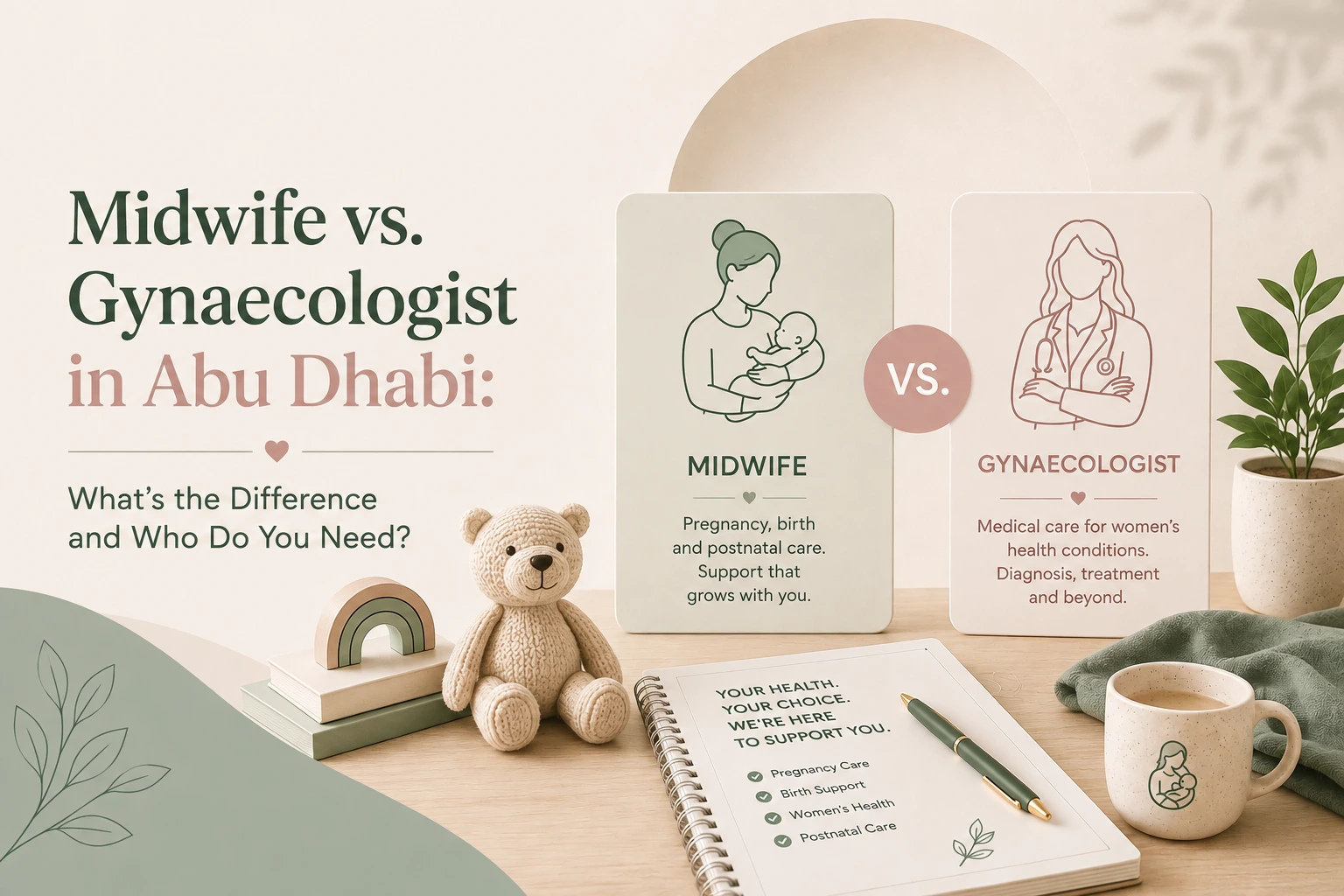
What a Gynaecologist Actually Does
A gynaecologist is a medical doctor who specialises in the female reproductive system, not limited to pregnancy. Gynaecologists diagnose and treat conditions like fibroids, endometriosis, hormonal disorders, and fertility issues, and they perform routine care like cervical screenings and annual exams, whether or not you’re pregnant or ever plan to be.
Many gynaecologists are also trained in obstetrics, the specific branch dealing with pregnancy, labour, and birth, which is why you’ll often see the combined title “OB/GYN.” An obstetrician-gynaecologist has completed medical school followed by a residency covering both fields, giving them the surgical training to perform caesarean sections and manage complications that require medical or surgical intervention.
In short: a gynaecologist is your go-to for the full spectrum of reproductive health, and if they’re also trained in obstetrics, they’re equipped to manage high-risk pregnancies and step in surgically when needed.
What a Midwife Actually Does
A midwife is a licensed healthcare professional whose training centres specifically on pregnancy, labour, birth, and the postpartum period. In Abu Dhabi, midwives are licensed by the Department of Health (DoH), and midwifery here is officially recognised as an autonomous, independent profession, meaning a registered midwife can provide antenatal care, conduct vaginal births under her own responsibility, and manage newborn care, not simply assist a doctor.
Where midwifery tends to differ in approach, not just training, is philosophy. Midwives are trained to view pregnancy and birth through the lens of a normal physiological process, with a strong emphasis on continuity, hands-on support, and patient education, checking in on how you’re actually coping, not just what your latest scan shows. That doesn’t mean midwives are less rigorous; it means the model of care is built around spending more time with you and recognising early when something moves outside the range of “normal” and needs a doctor’s involvement.
It’s worth being clear about something a lot of expectant mothers don’t realise: midwives are trained specifically to recognise complications and escalate care when needed. A good midwife isn’t someone avoiding doctors, she’s someone who knows exactly when to bring one in.
The Real Difference, Side by Side
| Features | Gynaecologist / OB/GYN | Midwife |
|---|
| Training | Medical school + residency (up to 12 years) | Specialised midwifery degree/certification |
| Can perform surgery | Yes (including C-sections) | No |
| Manages high-risk pregnancies | Yes | Refers out or works alongside a doctor |
| Manages low-risk pregnancies | Yes | Yes, as primary carer |
| General gynaecological care | Yes (fibroids, fertility, screenings) | No |
| Continuity of care model | Varies, often rotating | Often one-to-one, especially with independent midwives |
| Typical setting | Hospital, private clinic | Hospital, clinic, or home visits |
So Which One Do You Actually Need?
The honest, evidence-backed answer for most pregnancies: it’s rarely an either/or decision, and for many women, the strongest outcomes come from a midwife as your primary, continuous carer with a doctor available for anything that needs medical or surgical expertise.
That’s not a soft opinion, it’s what a large body of recent research actually shows. A 2024 meta-analysis pooling data from 44 studies and nearly 1.4 million women found that midwife-led care for low-risk pregnancies carried a lower risk of unplanned caesarean section, instrumental delivery, labour augmentation, and episiotomy, along with shorter hospital stays and lower rates of infection and blood transfusion, without any increase in serious risk to babies. A separate 2024 review comparing midwife-led and shared care models found midwife-led care reduced the rate of assisted vaginal birth by roughly 45% and caesarean section by roughly 47%, again with no difference in newborn wellbeing.
None of this means an obstetrician is unnecessary, quite the opposite. The same body of research consistently shows that once a pregnancy involves real risk factors, a doctor’s medical and surgical expertise becomes essential, and the best outcomes come from a system where a midwife and a doctor work together rather than a mother having to choose one and lose access to the other.
When a Gynaecologist Should Be Your Primary Provider
There are situations where obstetric medical care needs to lead from the start:
- Pre-existing conditions like diabetes, high blood pressure, or heart disease
- A pregnancy with twins, triplets, or more
- A history of pregnancy complications or pregnancy loss
- Placenta praevia or other placental conditions
- A known need for a planned caesarean section
- Any complication that develops during pregnancy requiring medical or surgical management
If any of these apply to you, an obstetrician-led or shared-care model is the safer, more appropriate path, and a good midwife will be the first to tell you that, not the last.
When a Midwife-Led Model Makes Sense
For a healthy, low-risk pregnancy, a midwife as your primary, continuous carer, with a doctor available if anything changes, is well-supported by the evidence as a genuinely strong option, not a lesser one. It tends to suit women who want:
- The same care provider throughout pregnancy, birth, and the postnatal period, rather than a rotating team
- More time spent on questions, preparation, and emotional support at each visit
- A stronger say in how their birth is managed, with fewer routine interventions
- The option of home visits, particularly postnatally, when leaving the house with a newborn feels genuinely difficult
What “Independent Midwife” Means in Abu Dhabi
This is the term that confuses most newcomers to the city. An independent midwife is a DoH-licensed midwife who works with you directly, outside the standard hospital roster system, providing continuous one-to-one care from your first antenatal visit through labour and into postnatal recovery, often including home visits, which is not standard with most hospital-based obstetric care.
Independent midwives in Abu Dhabi typically work in close coordination with a hospital and, where needed, an obstetrician, so if risk factors emerge or a caesarean becomes necessary, that handover is planned and smooth rather than a scramble. The goal isn’t to avoid doctors; it’s to give you continuity and hands-on support for the majority of your pregnancy, with medical backup exactly when it’s genuinely needed.